
Overview
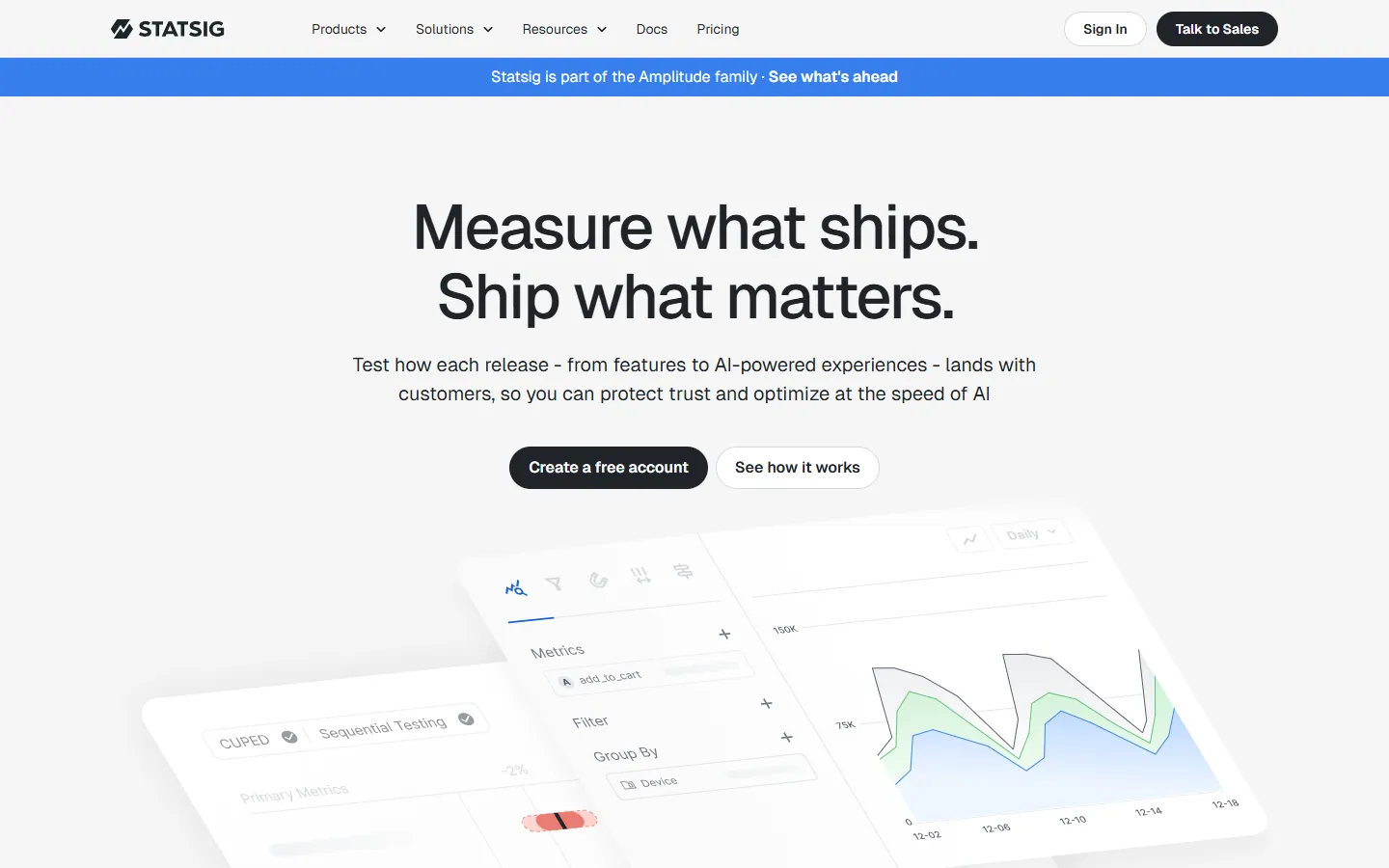
Statsig is an integrated product development platform designed for engineering, product, and data science teams. It combines feature management, experimentation, product analytics, session replay, and web analytics into a single workflow. The platform allows organizations to control software rollouts, test feature performance, and measure user impact without requiring disparate point tools.
Built to scale from startups to enterprise organizations, Statsig offers software development kits across client, server, and mobile frameworks. It supports both cloud deployments and warehouse-native implementations, enabling teams to evaluate metrics directly within their own data infrastructure.
Key features
- Feature management: Roll out features using dynamic configurations, attribute targeting, automated schedules, and instantaneous rollbacks.
- Experimentation engine: Conduct A/B and multivariate tests supported by statistical techniques like CUPED, sequential testing, and holdouts.
- Product analytics: Track user journeys, retention funnels, and conversion drivers to evaluate product changes against business metrics.
- Session replay: Record and analyze user sessions linked directly to feature flags and experiment exposures to identify usability issues.
- Warehouse native deployment: Run experimentation and analytics models directly inside existing cloud data warehouses.
- Developer integrations: Connect feature flag workflows with developer tools such as GitHub, VSCode, Vercel, and Datadog.
Pros and cons
Pros
- Combines feature flags, experimentation, session replays, and analytics in one platform.
- Provides native SDK support across a wide variety of client and server frameworks.
- Offers warehouse-native deployment options for enterprise data security and governance.
Cons
- Metered event pricing structure can make monthly costs variable under heavy event traffic.
- Platform complexity may require initial onboarding effort for non-technical stakeholders.
Integrates with AI
Connect Statsig to AI assistants and agents.
Compare: Marketing tools with an MCP server
Best for
- Product managers
- Developers
- Engineering teams