
Overview
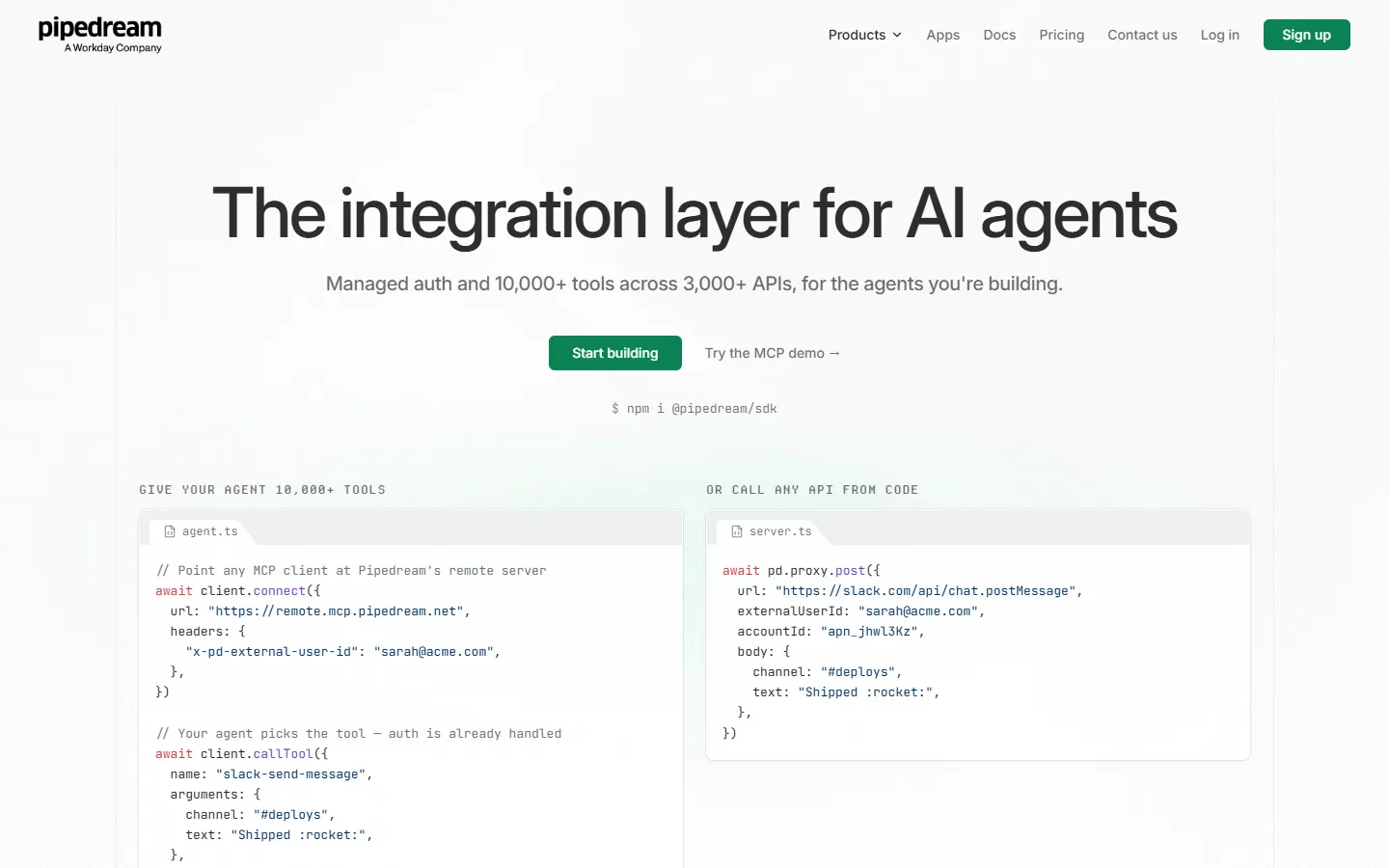
Pipedream is an integration platform and runtime designed for developers and technical teams building AI agents and workflow automations. It provides managed authentication, API proxies, and prebuilt tools to connect software products with external services without requiring developers to manage OAuth clients or infrastructure.
The platform sits between AI agents or application backends and third-party APIs. Developers can embed authorization flows using prebuilt links or custom interfaces, while Pipedream handles token storage, security, and refresh flows across connected user accounts.
Key features
- Managed authentication: Handles OAuth flows, API key entry, token storage, and automatic credential refreshes across connected apps.
- MCP server integration: Exposes tools through a single Model Context Protocol endpoint for AI agents with per-user authentication.
- Connect Proxy: Forwards HTTP requests to third-party endpoints while injecting stored credentials automatically.
- Prebuilt tools and triggers: Provides prebuilt actions and real-time event triggers across thousands of public APIs.
- Managed runtime: Executes integration logic and workflows in hosted serverless infrastructure.
Pros and cons
Pros
- Eliminates the need to maintain OAuth app registrations and credential refresh logic.
- Integrates with standard Model Context Protocol clients for AI agent tool execution.
- Offers a proxy layer to interact with endpoints even without dedicated prebuilt components.
Cons
- Primary features target technical developers requiring API and code execution knowledge.
- Advanced security features like SSO and HIPAA compliance are restricted to custom enterprise plans.
Integrates with AI
Connect Pipedream to AI assistants and agents.
Compare: Marketing tools with an MCP server
Best for
- Developers
- Product teams
- AI builders