
Overview
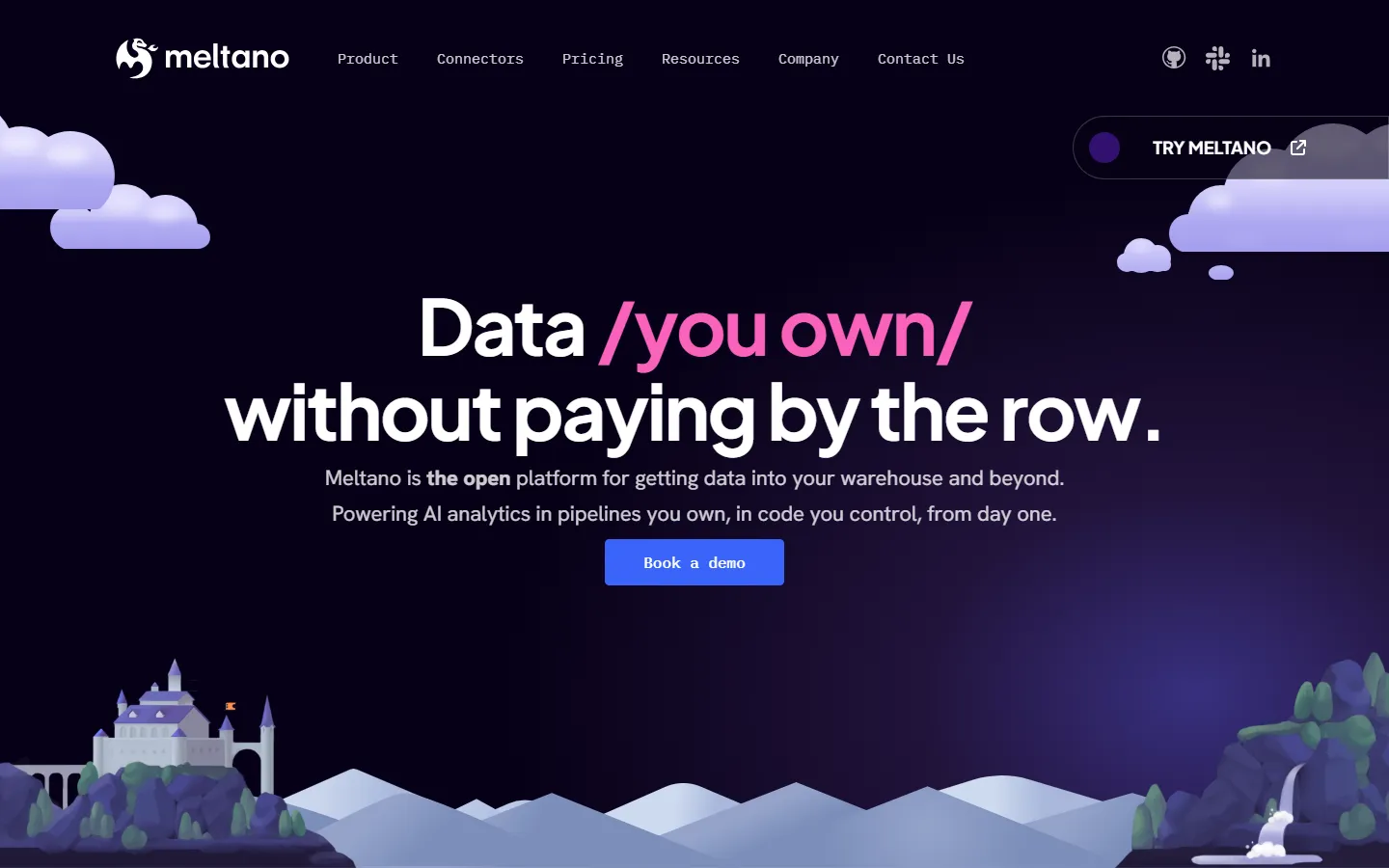
Meltano is an open-source, code-first data integration and ELT platform designed for data engineering teams. It enables organizations to extract, load, and transform data from SaaS applications, databases, and APIs into data warehouses or analytics storage. By managing data pipelines as code, engineering teams maintain full control over versioning, testing, and deployment workflows using standard Git tools.
The platform provides access to over 600 connectors and integrates directly with tools like dbt for transformations and Elementary for data quality validation. Users can run pipelines locally, deploy them on self-managed infrastructure, or utilize managed Meltano Cloud orchestrations. Meltano supports multiple execution modes, including CLI, web interface, API, and automated workflows.
Key features
- Connector ecosystem: Access over 600 pre-built extractors and loaders for databases, APIs, SaaS applications, and custom sources.
- Pipeline as code: Define data pipelines, configurations, and environment variables in version-controlled code repositories.
- Transformation integration: Run in-repo transformations by integrating natively with dbt models and SQL workflows.
- Data validation: Execute automated data quality and schema validation checks using Elementary integration.
- Flexible execution: Run pipelines via command-line interface, graphical user interface, programmatic API, or AI assistance.
- Orchestration options: Schedule and monitor jobs using Meltano Cloud or integrate with external orchestrators like Apache Airflow and Dagster.
Pros and cons
Pros
- Open-source foundation with no vendor lock-in for connector development and self-hosting.
- Version control and CI/CD compatibility allow data teams to apply software engineering practices to pipelines.
- Supports a large catalog of connectors covering popular and niche data sources.
Cons
- Self-hosting requires dedicated infrastructure management and DevOps expertise.
- Advanced pipeline customization may require Python programming knowledge.
Best for
- Data engineers
- Analytics teams
- Data-driven organizations